BetterSleep — Routine, retention, and a 20-point onboarding lift.
Led design on the Lifecycle and Growth pillars at BetterSleep. Two shipments: an onboarding revamp that lifted completion 20%, and Routine — a consolidating new product that lifted Android RPU 13%.
Snapshot
Outcomes
Problem
Onboarding had been micro-optimized for two years and plateaued. Home was exploration-led but 80% of users just hit play — features lived in silos.
What I led
Designed a personalized, hypothesis-driven onboarding flow using the Hooked framework. Architected Routine — a flagship product consolidating sleep tracking and sound mixes into one practice.
What shipped
New onboarding flow on iOS. Home revamp + Routine on iOS and Android. Both shipped with measurable lifts on retention, conversion, and content engagement.
Onboarding — when micro-optimization runs out.
The team had been A/B testing onboarding for two years. We'd lifted what was liftable through micro changes — copy tweaks, button positions, ordering — and retention had plateaued. Marketing was driving traffic the onboarding couldn't capitalize on, because the flow had no way to reflect the user's actual reason for showing up.
Hypothesis: apply the Hooked framework (Invest → Reward) and personalize value props to the user's stated context. Break the plateau on completion, and create a hand-off point where marketing traffic translates into product fit.
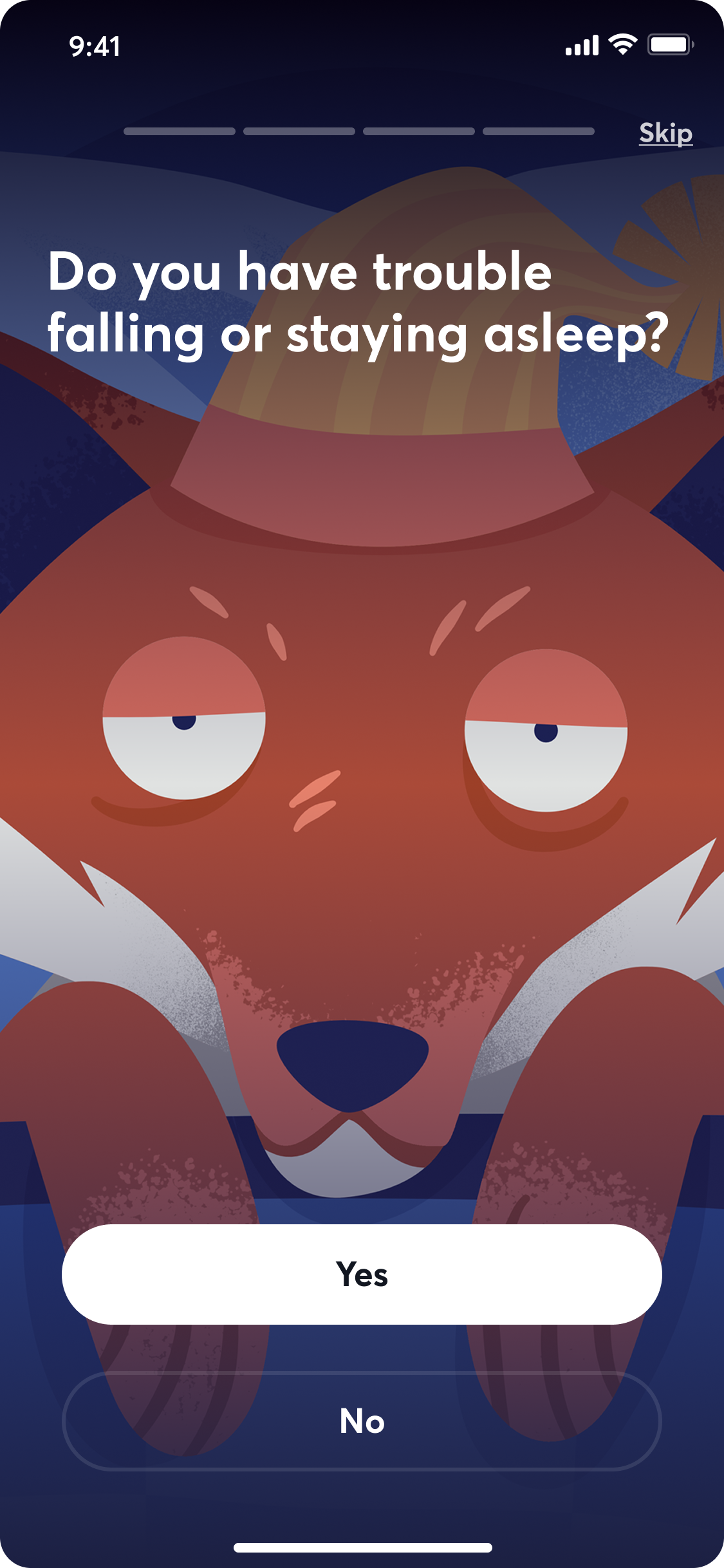
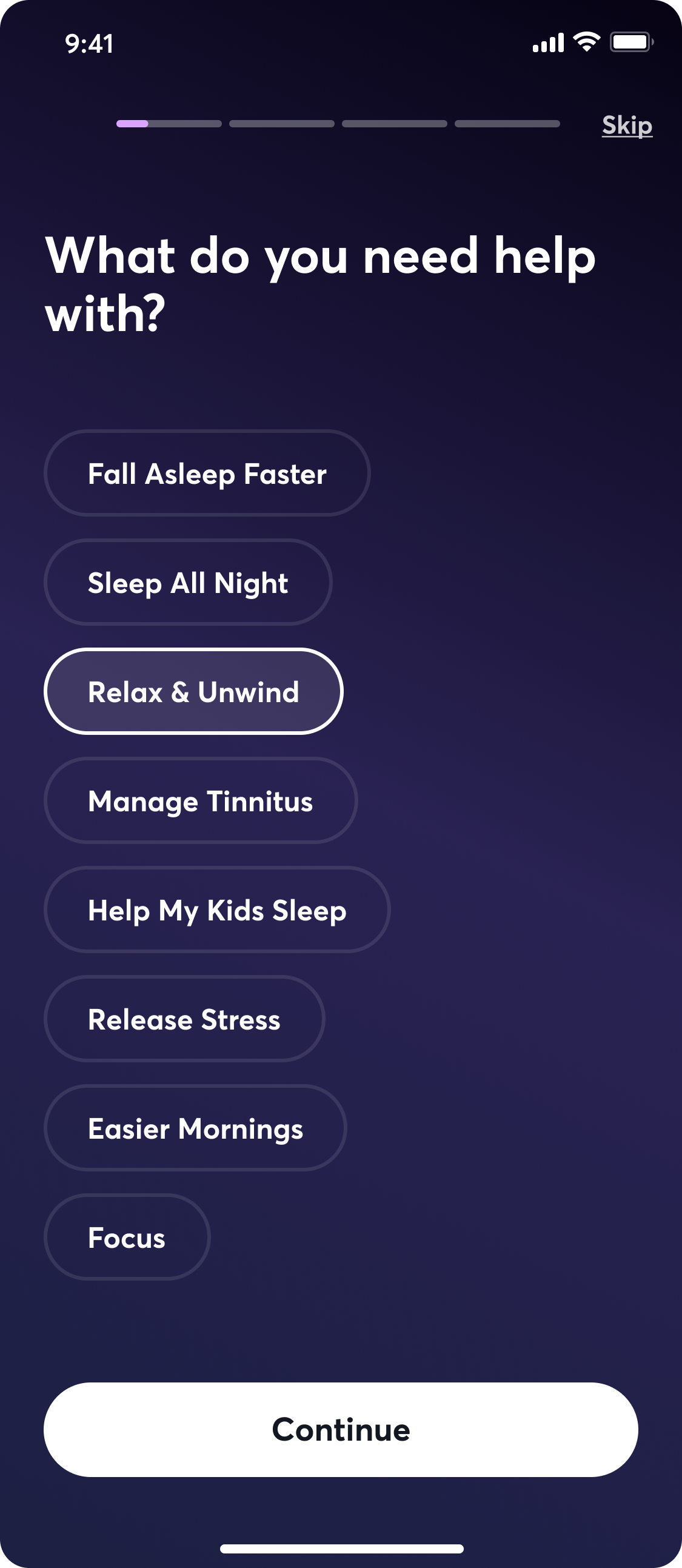
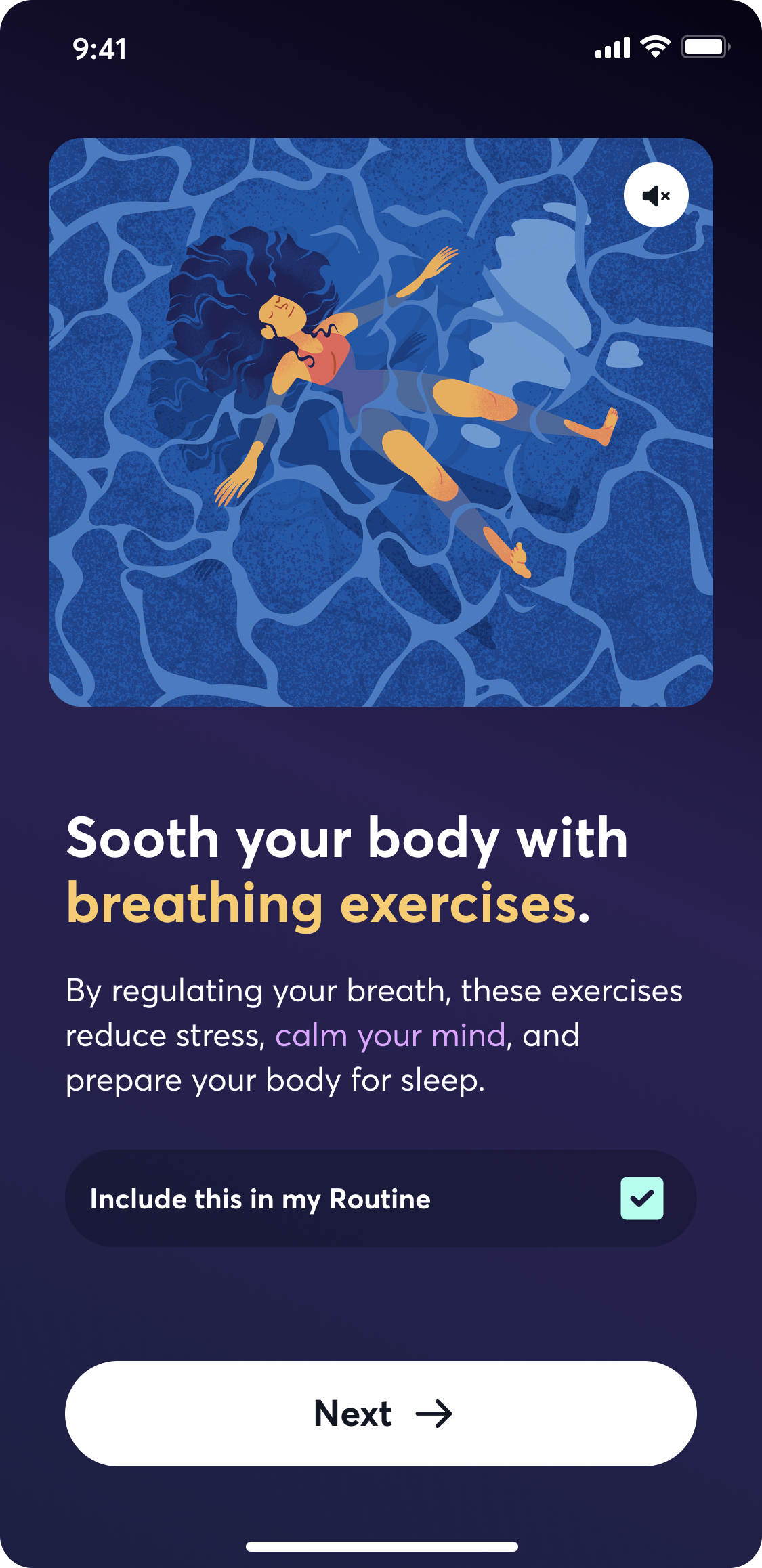
Personalization with an exit ramp.
The questionnaire lets users skip topics that don't apply to them. Most onboarding flows treat skip rate as a leak — I treated it as signal. If a user skips "Help my kids sleep," that's information; we shouldn't keep pushing it later in the lifecycle. The skip became part of the personalization, not the opposite of it.
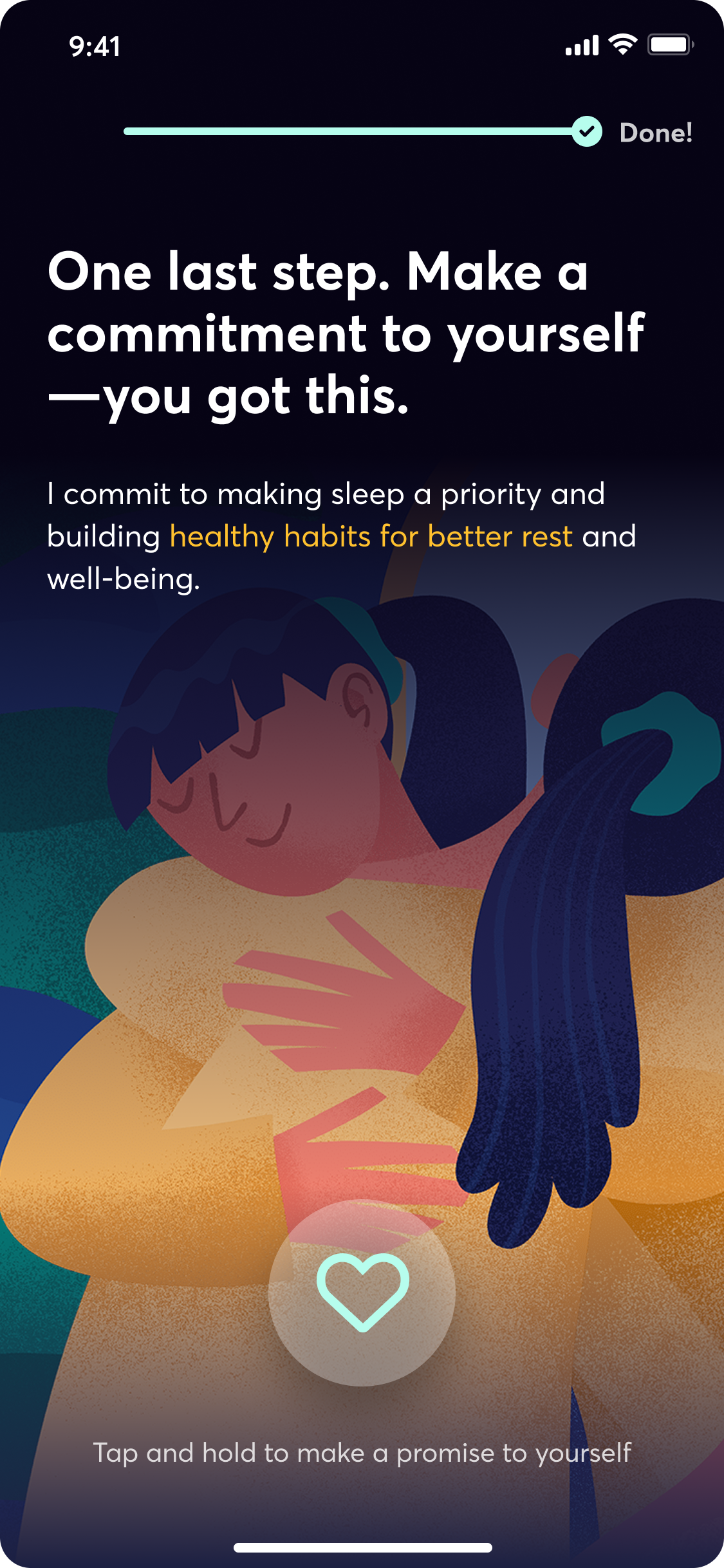
The Invest moment.
The final step asks the user to tap and hold to "commit to themselves" — identity language, micro-investment. Hooked-framework readers will recognize the Invest → Reward loop closing here. The "you got this" subhead lands because we earned it: the user has just told us why they're here.
-
iOSOnboarding completion rate↑ 20%
Home + Routine — turning a content app into a practice.
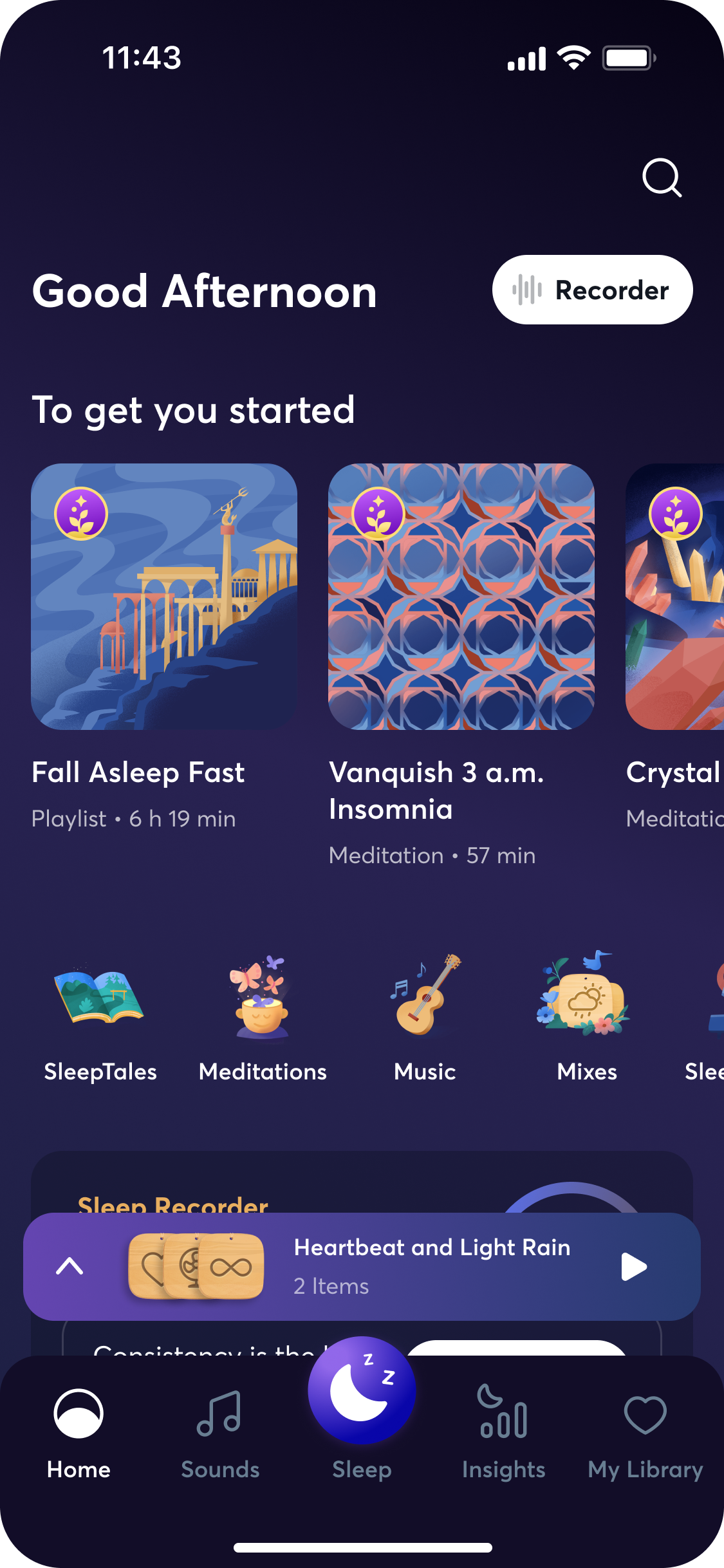
BetterSleep had two distinct user behaviors: sleep-sound listeners who opened the app, hit play, and slept; and sleep trackers who used the recording feature. The features worked in silos. Roughly 80% of users opened the app and immediately hit play — limiting their exposure to anything else we'd built.
The old Home was exploration-led: a grid of content, a player, no narrative. It put the onus on the user to find their own path to value. Meanwhile, anything we promised during onboarding was easy to lose track of once the user landed.
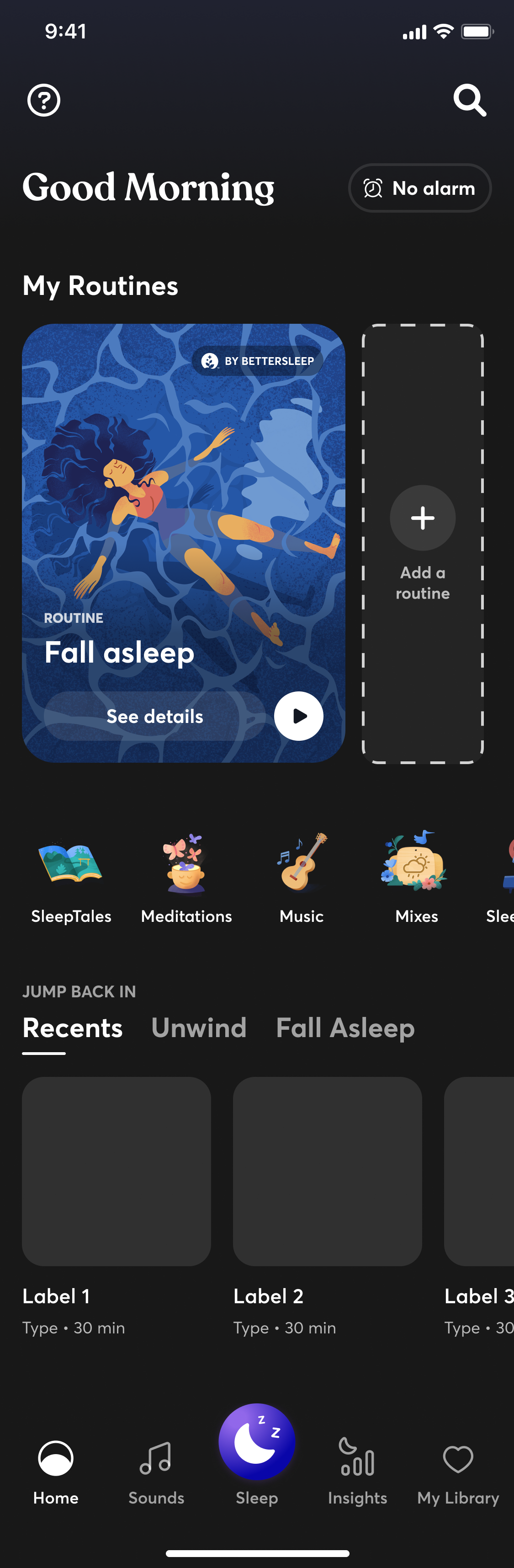
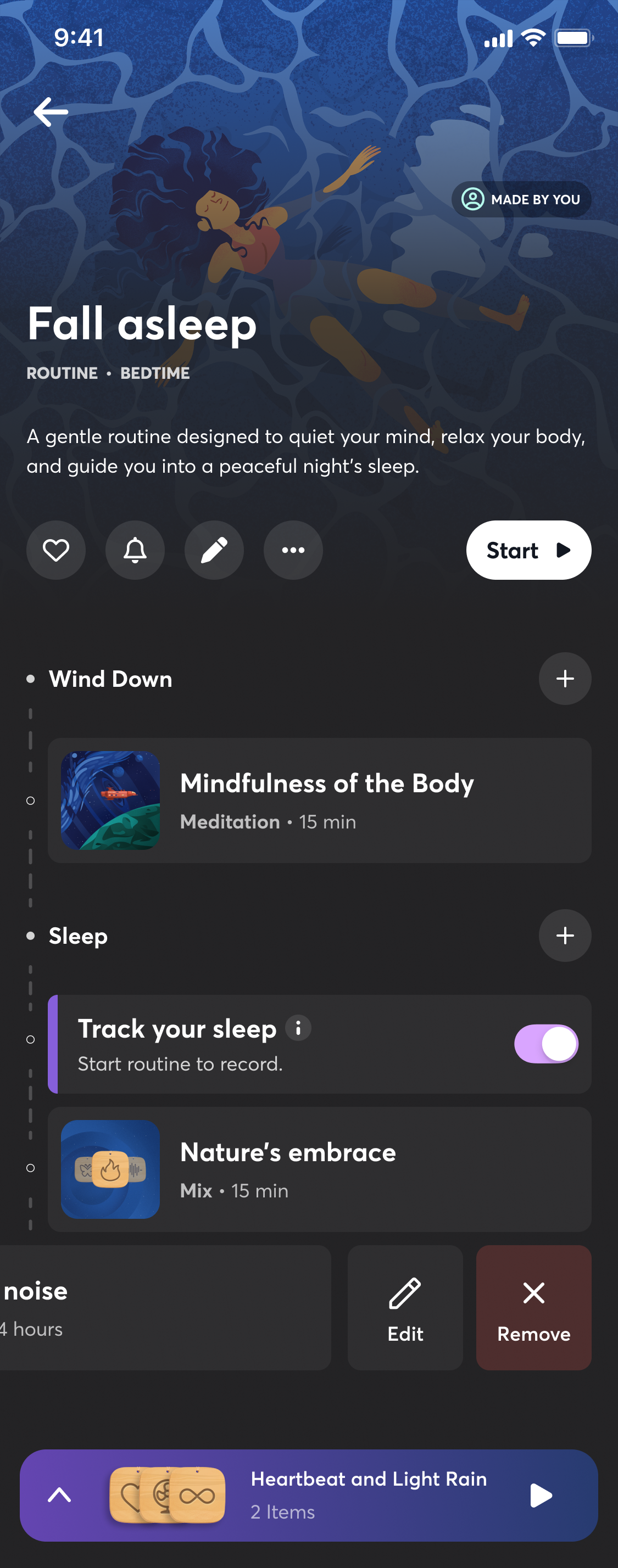
Routine as a flagship product, not a feature.
The bet: by packaging existing features (sleep tracking, sound mixes, meditations, SleepTales) into a single named product — "Routine" — we could give users an integrated practice instead of a content catalog. It also opened the door to new modular content that fits into a routine slot rather than competing for grid real estate.
De-prioritize exploration. Honor the onboarding promise.
The new Home leads with what the user told us they wanted in onboarding, via a time-aware header prompt ("It's bedtime, start your routine"). Exploration is still there, but moved below the through-line. The shift: from "browse our content" to "follow your practice."
- AndroidRevenue per user↑ 13%
- AndroidOverall paid rate↑ 5%
- AndroidRefund rate↓ 5%
- AndroidHome → listening conversion↑ 15%
- iOSRevenue per user↑ 6.5%
- iOSOverall paid rate↑ 2.3%
- iOSRefund rate↓ 3%
- iOSHome → listening conversion↑ 12%
How I worked with the team.
BetterSleep was a cross-functional design lead role. I was the design owner for Lifecycle and Growth, partnered with PMs on hypothesis framing, engineering on feasibility and ACs, and stakeholders on roadmap. Two principles stayed constant:
- Define the terminology before you design. "Engagement," "friction," and "retention" all sound concrete until two people on the same call mean different things by them. The first move on a discovery pass was always to convert abstract words into explicit problem statements.
- Stick to the playbook when you can: Goals → Data → Problem statements → Hypotheses. When the team agreed on that flow, design reviews were short and shipped work didn't get re-debated. When we skipped a step, we paid for it downstream.